
The Materials
Our Woods
Every piece I build began as a tree somewhere — growing one ring at a time, in a forest most of us will never see. My job isn’t to create something beautiful. The beauty is already there. I simply have the privilege of uncovering it.
These are the woods I return to most. Here is where each one comes from, what makes it special, and what it does best.
Honduran Mahogany
Swietenia macrophylla
The wood every other fine wood is measured against.
For five centuries, mahogany has set the standard for fine furniture. Spanish builders used it in the palace of El Escorial in the 1580s, and by the late 1700s British workshops were importing tens of thousands of tons a year from the Caribbean and the coast of Honduras.
That popularity came at a cost. Wild stands were logged hard for generations, and today bigleaf mahogany is protected under CITES and listed as endangered. With this wood, where it comes from matters as much as how it looks — mine comes through Eco Forestry Products, sourced in compliance with CITES.
At the bench it is a gentle wood. It cuts cleanly, holds fine detail, and takes a finish like few others. Turn a board in the light and the grain shimmers. Over the years it deepens from a soft pinkish brown to a rich, dark red.
Sourced through Eco Forestry ProductsField Notes
- Also known as
- Caoba, genuine mahogany, bigleaf mahogany
- Where it grows
- Southern Mexico through Central and South America
- Color & grain
- Pinkish to reddish brown, darkening with age; shimmering figure
- Hardness (Janka)
- 900 lbf
- Durability
- Moderately to very durable
- Best for
- Furniture, display pieces, serving trays — too soft for daily knife work

Mayan Ruby
Lonchocarpus castilloi
Timeless strength. Legendary beauty.
This tree grows in the moist tropical forests of the Yucatán and neighboring Guatemala — the same forests that once surrounded the great Maya cities. Locally it goes by names like manchiche, balche, and kanazin.
It is harvested sparingly. My supplier describes a rate of about one mature tree for every two acres, with the forest left to recover for twenty-five years before anyone returns.
The color lives up to the name: warm reds and golden browns, often traced with dark streaks and cathedral grain, deepening with age like old cherry. It is also remarkably strong — more than twice the bending strength of mahogany — and hard enough to dull my blades. That is exactly what you want in a board meant to be used every day.
Sourced through Eco Forestry ProductsField Notes
- Also known as
- Manchiche, machiche, Mayan cherry
- Where it grows
- Yucatán Peninsula, Guatemala, and Belize
- Color & grain
- Red to golden brown with dark streaks; darkens with age
- Hardness (Janka)
- 2,610–2,820 lbf
- Durability
- Very durable — highly resistant to rot
- Best for
- Cutting boards, serving boards, tabletops, high-wear displays
Teak
Tectona grandis
Grown one ring at a time.
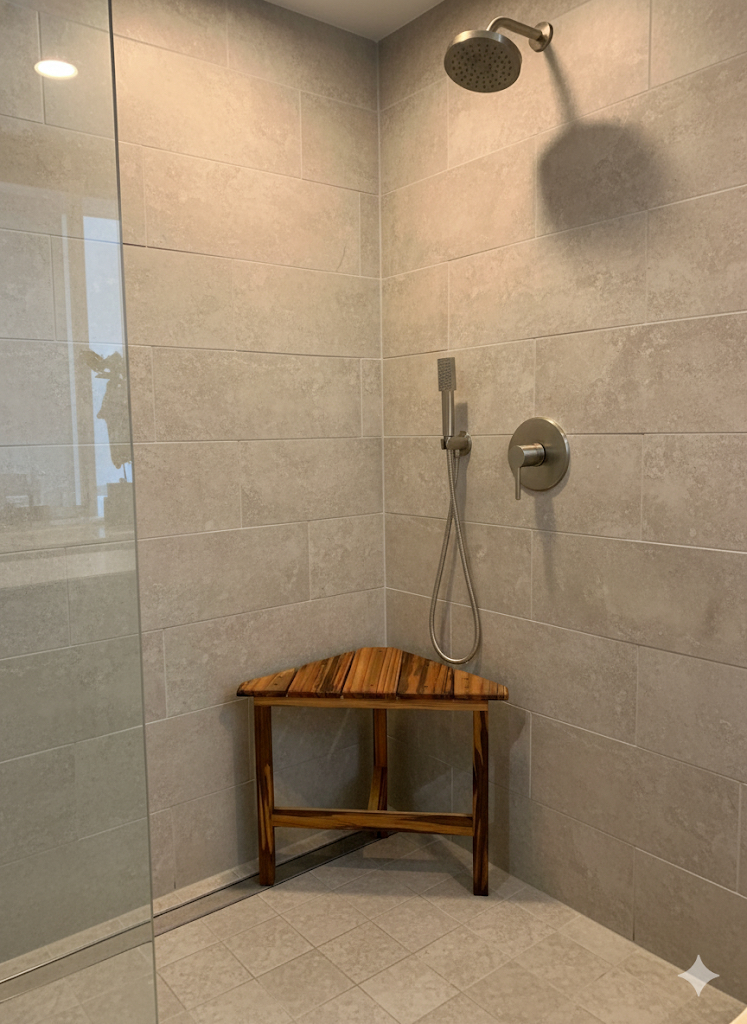
Teak is native to the monsoon forests of South and Southeast Asia, where it has been prized for centuries for anything meant to face water and weather. Today much of the world’s teak is grown on plantations across the tropics, including tens of thousands of hectares in Guatemala.
The teak in my shop began as plantation-grown trees in Guatemala. Each spent decades growing one ring at a time before being responsibly harvested and milled by a small village in the Guatemalan countryside. By the time it reaches Georgia, its story is already well underway.
Its natural oils give it a slightly waxy feel and a faint leathery scent when cut, and they are a big part of why teak shrugs off moisture. Freshly milled it is golden brown. Indoors it deepens with age; left outside, it weathers to a soft silver.
Sourced through Eco Forestry ProductsField Notes
- Also known as
- Genuine teak
- Where it grows
- Native to South and Southeast Asia; plantation-grown in Guatemala
- Color & grain
- Golden to medium brown; silvers outdoors
- Hardness (Janka)
- 1,070 lbf
- Durability
- Naturally oily; excellent moisture resistance
- Best for
- Indoor and outdoor furniture, shower benches, trays, displays
Tzalam
Lysiloma latisiliquum
The warmth of walnut, from Caribbean forests.
Tzalam grows from southern Mexico and Belize through Cuba, the Bahamas, and the tip of Florida. It is often sold as Caribbean walnut, though it isn’t a walnut at all — it belongs to the legume family, making it a distant cousin of Mayan Ruby.
The nickname fits anyway. Its heartwood runs from light to medium brown with reddish or purple undertones and darker streaks, with an open, even texture that feels good under the hand. Sanded and finished, it polishes to a natural sheen often compared to Hawaiian koa.
It is harder than both black walnut and red oak and very resistant to rot and insects, so it is as comfortable in a serving board as it is in a dining table.
Sourced through Eco Forestry ProductsField Notes
- Also known as
- Caribbean walnut, sabicu, false tamarind
- Where it grows
- Southern Mexico, Belize, Cuba, the Bahamas, South Florida
- Color & grain
- Light to medium brown with reddish or purple hues and dark streaks
- Hardness (Janka)
- 1,400 lbf
- Durability
- Very durable; resists most insects
- Best for
- Furniture, serving and cutting boards, display tops
Mylady
Aspidosperma megalocarpon
Dense, bright, and built for the kitchen.
Known as My lady in Belize and chichica in Guatemala, this tree grows from southern Mexico through Central America and into the northern reaches of South America.
It is one of the densest woods I work with — nearly as dense as water — with a warm orange-gold to reddish-brown color that sometimes carries broad pink streaks.
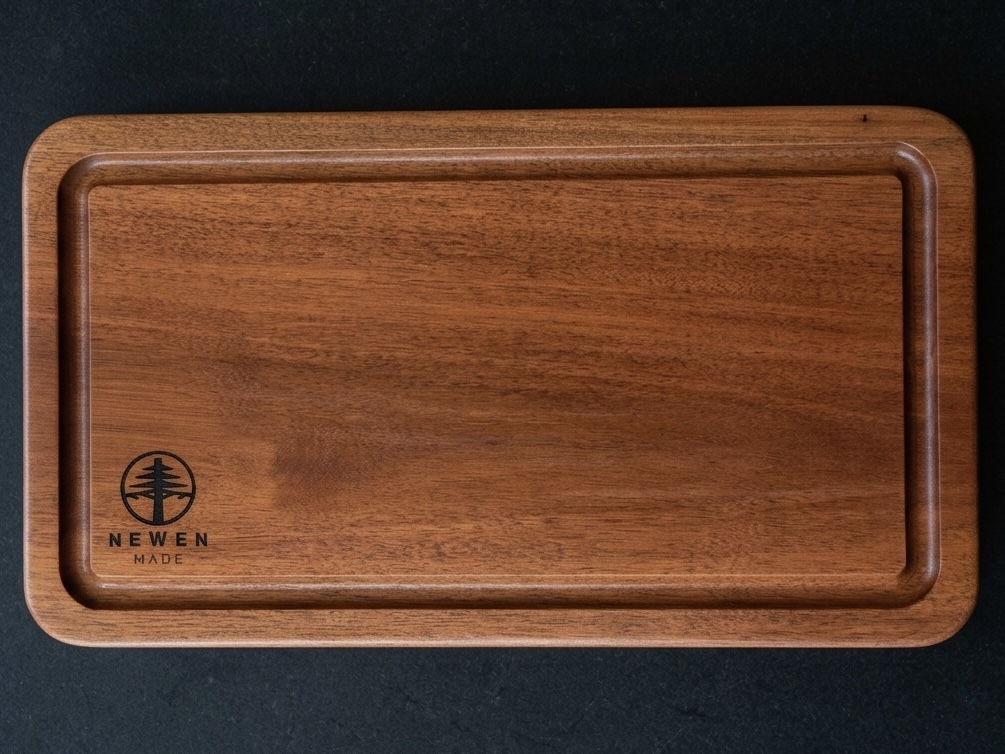
That density makes it a natural choice for chef’s boards. It stands up to years of knife work and resists decay. It asks for respect in the shop — it is hard on blades and has to be dried slowly and carefully — but the finished board is worth every bit of it.
Sourced through Eco Forestry ProductsField Notes
- Also known as
- My lady, chichica, araracanga
- Where it grows
- Southern Mexico through Central America to northern South America
- Color & grain
- Orange-gold to reddish brown, sometimes with pink streaks
- Hardness (Janka)
- ≈2,450 lbf
- Durability
- Very durable — highly resistant to rot
- Best for
- Chef’s boards, cutting boards, serving pieces, heavy-use tabletops
Side by Side
How Hard Is It?
The Janka test measures the force needed to press a steel ball halfway into the wood. Higher numbers mean more resistance to dents and knife marks. Familiar woods are shown for scale.
- Mayan Ruby 2,610–2,820 lbf
- Mylady ≈2,450 lbf
- Hard Maple 1,450 lbf
- Tzalam 1,400 lbf
- Red Oak 1,220 lbf
- Teak 1,070 lbf
- Black Walnut 1,010 lbf
- Honduran Mahogany 900 lbf
Our Source
Eco Forestry Products
Atlanta, Georgia
Every wood on this page comes through Eco Forestry Products, an exotic hardwood distributor just up the road in Atlanta. They supply doors, decking, flooring, and lumber from tropical species that are still rare in the North American market.
“We work directly with our suppliers to give our clients the best available product from an honorable and sustainable production.”
Knowing the people behind the wood matters to me. It means that when a piece leaves my shop, I can tell you where it began — not just what it became.
Visit Eco Forestry ProductsThe journey isn’t finished. It’s just changing hands.
Have a wood in mind?
Every commission starts with choosing the right species for the piece. Let’s talk about yours.
Start a Conversation